Ledger Launches Readable Transaction Approvals for Solana Swaps
Ledger's Clear Signing covers nine Solana apps and 18 of the 22 most common actions, starting with Jupiter and Kamino. A Jupiter swap takes 3 approval screens instead of 13.
CryptoMEV Bot Newsroom3 min read
Key takeaways
- Clear Signing covers nine Solana apps and 18 of the 22 most common actions.
- A Jupiter swap now takes 3 approval screens instead of 13.
- The feature requires Ledger Solana app version 1.17.0 or higher.
"Until now, most Solana DeFi on a Ledger meant signing blind," Ledger wrote.
Ledger launched Clear Signing for Solana at Breakpoint, according to Decrypt.
Crypto Briefing reported that the feature turns a bundle of Solana instructions into a readable summary of intent, assets and the action being completed.
| Key figure | Value |
|---|---|
| Supported Solana applications | 9 |
| Common on-chain actions covered | 18 of 22 |
| Jupiter confirmation screens before Clear Signing | 13 |
| Jupiter confirmation screens with Clear Signing | 3 |
| Minimum Ledger Solana app version | 1.17.0 |
| Apps planned through Atom on the Seeker platform | More than 1,500 |
What changes for Solana wallet users?
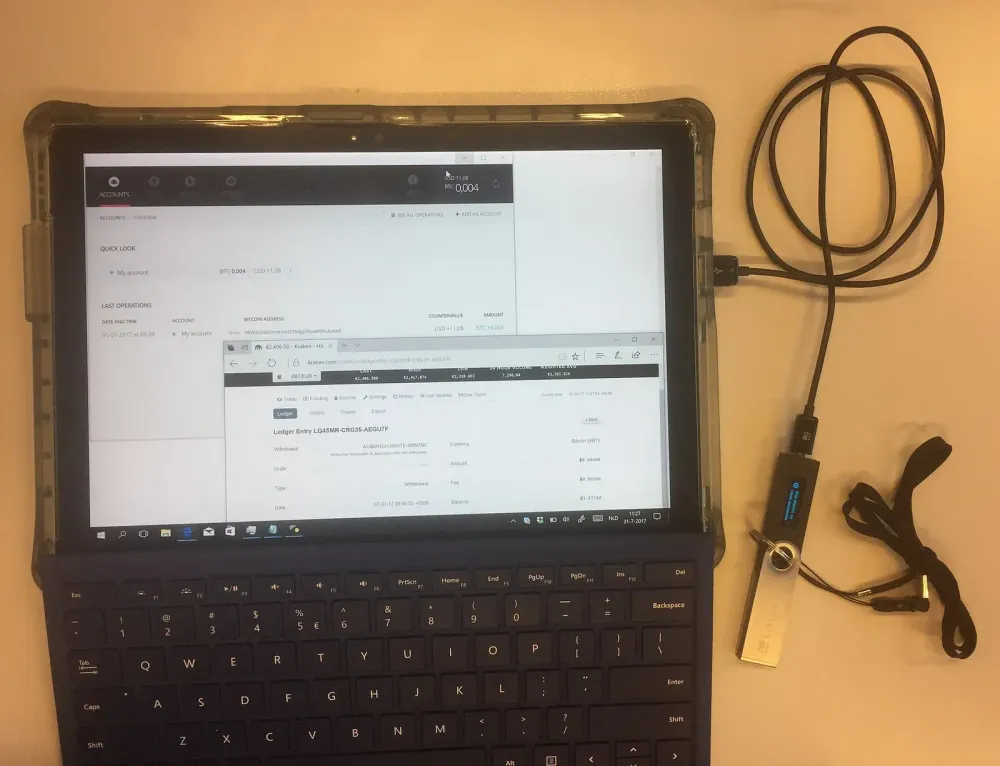
Clear Signing lets users of Ledger hardware wallets review what a transaction does before approval rather than approve unreadable data. For a swap on Jupiter, the device now shows what the user sends, what the user receives and, according to Ledger, who the user is dealing with.
The change reduces the approval flow from 13 confirmation screens to 3, both Decrypt and Crypto Briefing reported. The summaries are intended to expose a transaction's purpose before the user signs it on the hardware device.
The initial rollout covers 18 of the 22 most common actions across nine Solana applications. Jupiter was the first supported application, while the lending protocol Kamino was also included. Ledger developed the feature with the Solana Foundation and Anza, which develops the Agave validator client.
Ledger presented Clear Signing specifically as a feature for users of its hardware wallets. More CryptoMEV Bot coverage is available on the Advanced Solana MEV Bot and Powerful DeFi Arbitrage Bot | Multi pages.
How does Clear Signing work?
Clear Signing compresses several technical instructions into one readable summary. According to Crypto Briefing, a typical Solana DeFi action bundles 5-8 instructions, while raw transaction data generally means little to most users. The readable output identifies the user's intent, the assets involved and the action being completed.
The implementation is based on sRFC 41, a Solana community standard for converting complex instructions into human-readable intent. Developers whose applications want to display transaction summaries on Ledger devices are being asked to submit Codama IDLs, machine-readable maps of program instructions.
There are also two technical requirements. Users must run version 1.17.0 or higher of the Ledger Solana app, and the feature works only with wallets built on Ledger's DMK developer toolkit.
These requirements make Clear Signing a joint wallet-and-application feature rather than a change confined to the Jupiter interface. Ledger devices provide the signing environment, while supported applications supply the instruction maps needed to produce the summary.
What remains outside the initial coverage?
Clear Signing does not yet cover every common action on Solana. Ledger's stated rollout reaches 18 of the 22 most common actions, leaving the remaining actions without the new readable summaries. Crypto Briefing said those gaps are where blind signing will persist.
The collaboration around sRFC 41 also points to a shared method for describing Solana transactions. Ledger worked with the Solana Foundation and Anza on the implementation, while Jupiter and Kamino were the first supported applications named in the launch coverage.
What did Ledger show about agents and Atom?
Ledger also promoted Agent Intents and the upcoming Atom device at Breakpoint. Its agent model keeps cryptographic keys with the user: an agent requests permission to move funds, and the user approves the request on a Ledger device.
Agent Intents, launched last month, collects approval requests in a single queue. Ledger said this allows agents to keep working while users approve requests when convenient. The feature works with Pay.sh, a service that lets AI agents pay for APIs on Solana.
Atom is a touchscreen device based on Android's open-source code. Ledger said it switches to the company's secure chip when signing so secrets remain hidden from Android. Atom will be the first hardware device beyond the Solana Seeker phone to carry the Seeker platform and its more than 1,500 apps.
Sources
- Ledger Brings Clear Signing to Solana, Ending 'Blind' Signing for Jupiter Swaps — decrypt.co, 2026-11-16
- Ledger brings clear signing to Solana, starting with Jupiter swaps — cryptobriefing.com, 2026-11-16