Cloud Hardware Fault Disrupts Ethereum Access While Consensus Continues
Ethereum’s consensus layer continued operating normally on November 14, 2026, despite reported access problems caused by a hardware fault at an unnamed cloud provider.
CryptoMEV Bot Newsroom3 min read
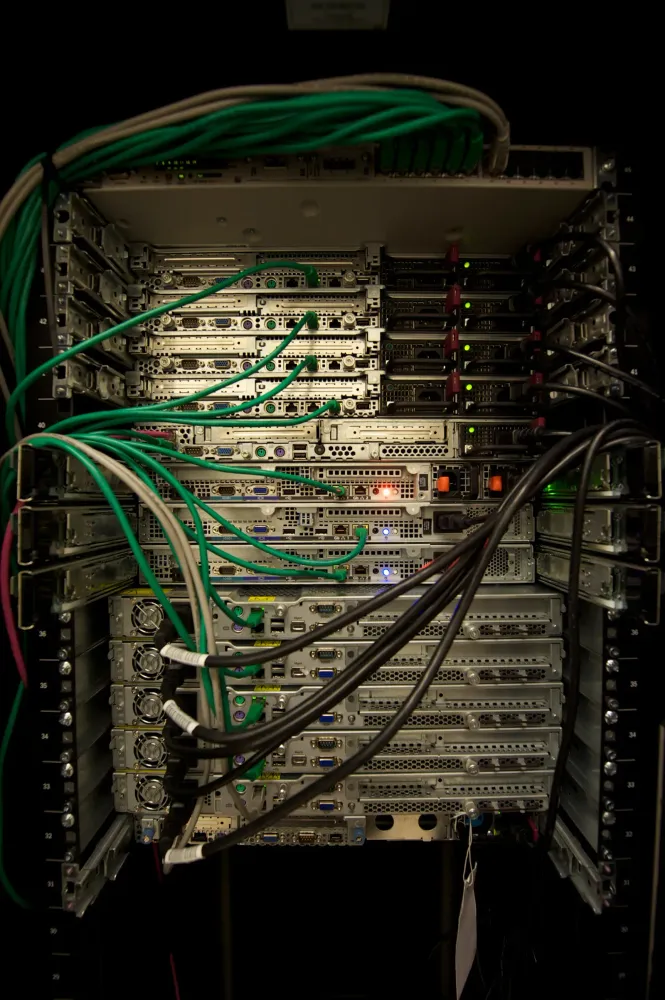
The network’s consensus layer kept operating normally on November 14, 2026, while a hardware fault at an unnamed cloud provider disrupted access to Ethereum.
"The blockchain itself appears to be fine." — Crypto Briefing reported.
Cloud hosting spans 35% to 60%
Ethereum separates consensus, where validators agree on block order and validity, from execution, where transactions and smart contracts are processed. Most applications query execution-layer nodes to read or write blockchain data, and many of those nodes operate from commercial data centers rather than hobbyists’ home machines.
Key reported figures
| Figure | Reported value |
|---|---|
| Ethereum execution-layer nodes hosted by cloud providers | 35% to 60% |
| Approximate share hosted by AWS | 35% |
| Date of the reported incident | November 14, 2026 |
| RPC performance issues reported | Around mid-November 2026 |
| Research window with no verified cloud hardware malfunction | Late October to mid-November 2026 |
| Previous AWS DynamoDB disruption | October 2025 |
As of November 2026, between 35% and 60% of Ethereum execution-layer nodes were hosted on cloud providers (CryptoNews). AWS alone accounted for approximately 35%, according to the report. Cloud failures have historically produced outages for wallets and exchanges that depend on cloud-hosted nodes. Blocks can keep being produced while people trying to check balances or submit transactions lose access through affected services.
The incident has also renewed a debate within the Ethereum community about infrastructure diversification. The reported concentration of execution-layer access points in corporate data centers has prompted arguments that a network focused on resilience should avoid relying on a small number of providers.
RPC issues have not been tied to widespread disruption
Remote procedure call providers, the services that allow applications to send requests to the blockchain, reported minor performance issues around mid-November 2026. Those issues had not been tied to widespread Ethereum disruption. Research covering late October through mid-November 2026 also found no verified report of a cloud hardware malfunction affecting Ethereum during that period.
The provider involved in the reported November 14 incident remained unnamed, and the full reach of the disruption had not been established.
For on-chain traders, the distinction between protocol operation and practical access remains important. Consensus activity continuing does not establish that every wallet, exchange or trading application remained available. Users may be unable to check balances or submit transactions through affected apps while Ethereum continues producing blocks.
October 2025 exposed the same access dependency
Failures in AWS’s DynamoDB service disrupted key Ethereum services for hours in October 2025, although consensus operations remained functional throughout. The earlier incident illustrates the same gap identified in the current report: a functioning Ethereum network can coexist with interrupted access to services built on dependent infrastructure.
The October incident is also relevant because the latest report asks whether the current episode will prompt node operators to distribute infrastructure across more providers, as happened after previous cloud failures. The source describes the broader discussion as a continuing Ethereum community debate rather than a confirmed change in operator arrangements.
Three items define the developing response
The report identifies three items to track. The first is whether the affected cloud provider is identified. The second is how long the access problems last and which services were hit. The third is whether node operators spread their infrastructure across more providers or return to business as usual after services recover.
The third item draws a direct comparison with the AWS disruption in October 2025. The report says the current episode is still developing and that its complete reach has not been established, leaving the provider’s identity and the duration of the access problems among the outstanding details.
Access options were identified in the report
The report identifies self-hosted nodes and access to more than one RPC endpoint as ways to reduce dependence on any single provider. These measures address the access layer described in the incident; they do not change the finding that Ethereum’s consensus layer kept working normally on November 14, 2026. The final watch item is whether node operators spread infrastructure across more providers or return to business as usual once services recover.
Read more
- Copy Trading Crypto: How to Follow Top Traders
- Advanced Front-Running Bot for MEV
- Ethereum Arbitrage Bot
Sources
- Ethereum faces temporary issues due to cloud provider malfunction — cryptobriefing.com, 2026-11-14
- Ethereum faces temporary issues due to cloud provider ... — cryptonews.net, 2026-11-14